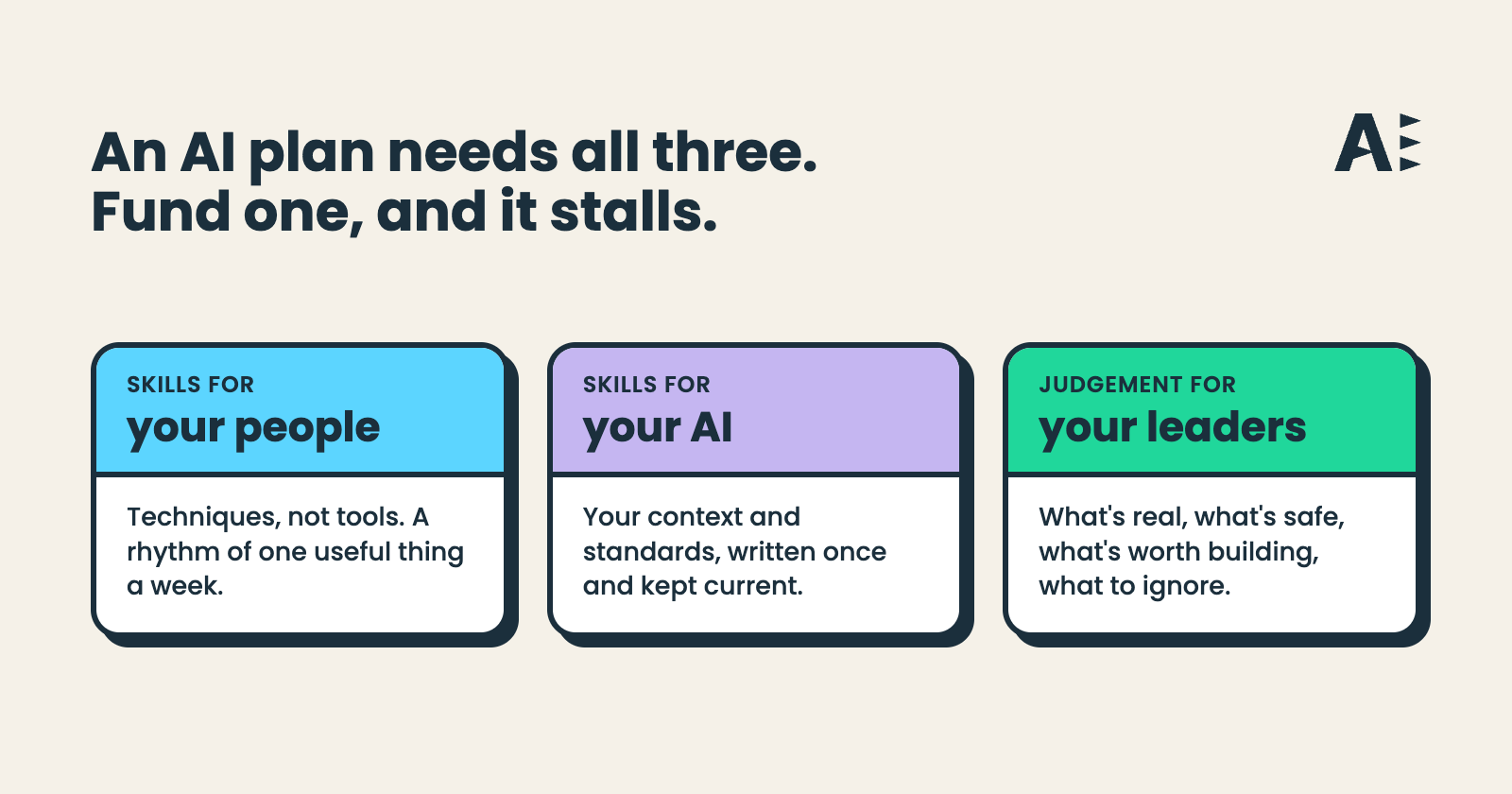
If you're signing off an AI budget this year, there's one quick check worth doing first. Look at where the money goes, and ask whether it covers three things: skills for your people, skills for your AI, and judgement for your leaders.
In our work, adoption stalls when an organisation funds one of these and hopes the other two follow. They don't. Each one holds the others up. Plan all three together and you get a programme that keeps moving after launch week.
01Three plans that stall
Most stalled AI programmes I see were funded sensibly. They just funded one leg.
People only. You run a good training programme. People leave the session interested. Then they go back to their desk and nothing is set up for them: no agreed tasks, no shared skills, nobody who has decided what's allowed. The interest fades.
AI only. You buy the licences and build some agents. The tools are capable. But the people using them can't yet judge when the output isn't good enough, and the agents were built once and left alone. Then the next model release does most of what your build did, and you're left maintaining it.
Leaders only. The board gets a strong briefing and a clear strategy. Everyone agrees AI matters. But nothing underneath has changed. People don't have the skills, and the AI hasn't been equipped to do the work. A strategy with no capability under it is a document. Advice without delivery is opinion.
02Skills for your people
The key thing for me is techniques, not tools. The tools come and go. Someone who knows how to brief AI well, check what comes back and decide whether it's good enough will carry that into every tool you buy next.
So start with the floor. Get everyone comfortable with the basics, and give them a useful task to start on. Then build a rhythm: one useful thing a week, tried on real work, talked through the week after. The ceiling follows, because confident people start asking bigger questions about whole processes and how the team works.

Champions matter here. A colleague showing you something that helped with their own work does more than any session.
03Skills for your AI
This is the leg most plans miss, and it's the newer idea. Your workforce is now people and AI working side by side. Both halves need equipping.
I explain it with an intern and an IKEA table. Point at the box, grunt and walk out, and there's a chance the intern builds what you wanted. Not a very good chance. Tell them where it is, how long they've got, where the instructions are and what good looks like, and you get your table. AI is the same. Give it your context, your standards and a clear way of doing the task, and the output changes.
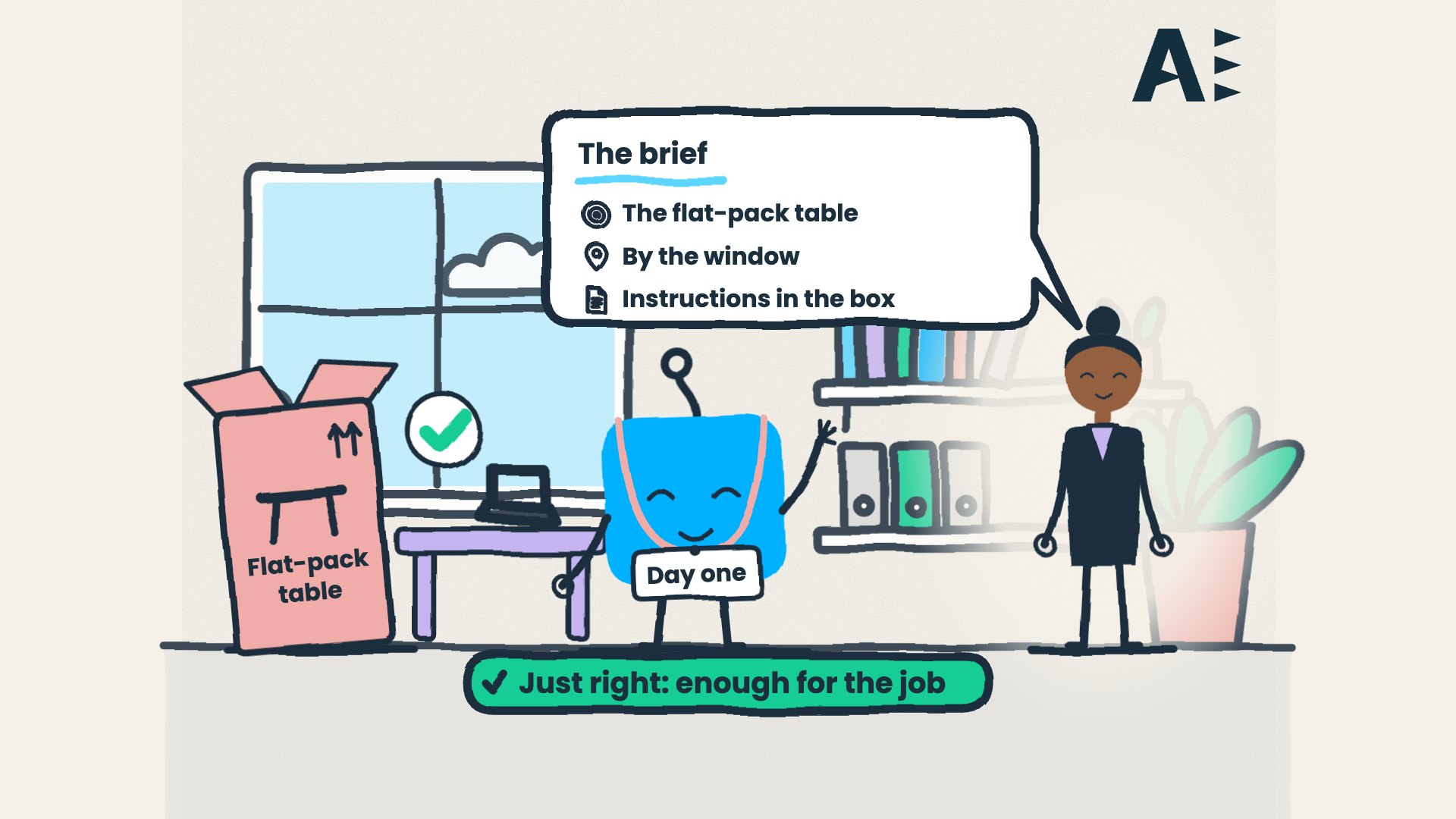
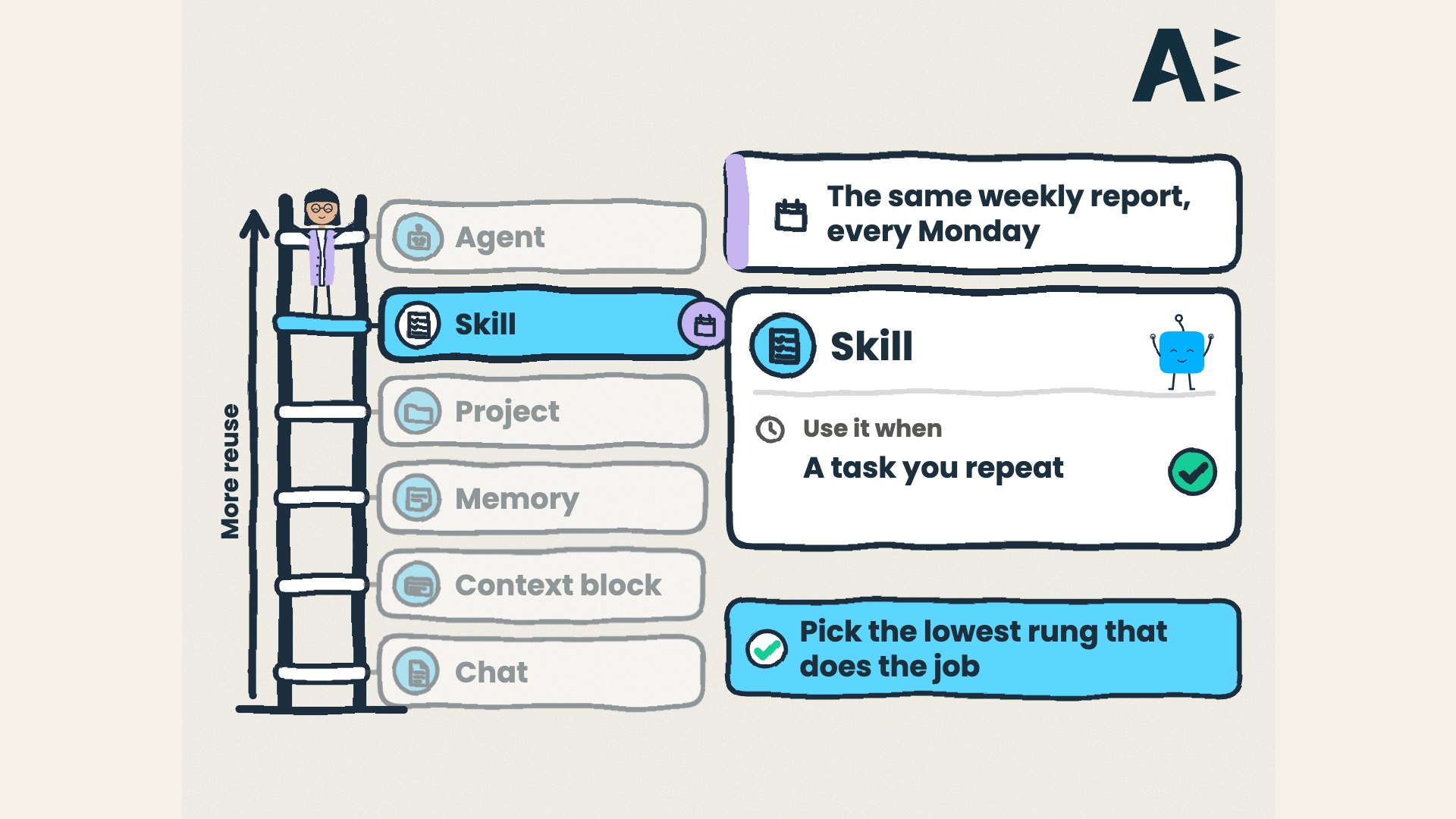
That's what a skill for your AI is. A reusable set of instructions your AI can follow, with a version number. Write it once, sharpen it as you learn, and swap it out when a better one exists. What one team works out doesn't have to be worked out again by the next.
04Judgement for your leaders
AI changes every week. Nobody inside your organisation has the time to track it and do their day job. That isn't anyone failing. It's a gap in the structure, and somebody has to own the watching.
Leaders need four answers about anything new: what's real, what's safe, what's worth building, and what to ignore. Often the hardest call is a fifth one: wait three months. I've watched long internal builds overtaken by the next model release. Knowing when to build and when to wait can save more than the rest of the programme costs.
That judgement only holds up when it's earned in delivery. It's why we run our own business on AI and share what we learn, including the bits that still need work.
05How to plan all three together
You don't need three big programmes. You need one plan with three lines in it. Before you sign it off, ask:
- People: who learns what first, and what will they practise on the week after?
- AI: which tasks will we equip our AI to do well, who owns those skills, and how do they stay current?
- Leaders: who is watching the frontier for us, and how often do they bring a decision back to the board?
If one of those has no name and no budget next to it, that's where your programme will stall.
The three don't have to start on the same day. They do need to sit in the same plan, so each one has the others to lean on.
06Where we fit
This is how we're set up. Our platform keeps both halves of your workforce current: lessons and techniques for your people, skills and context files for your AI. Our practitioner-led enablement raises the floor and builds the rhythm. Our advisory work helps boards and leadership teams decide what to back next. You can buy each on its own. They work best planned together.
If you're shaping next year's AI budget and want a second pair of eyes on whether it covers all three, talk to us.