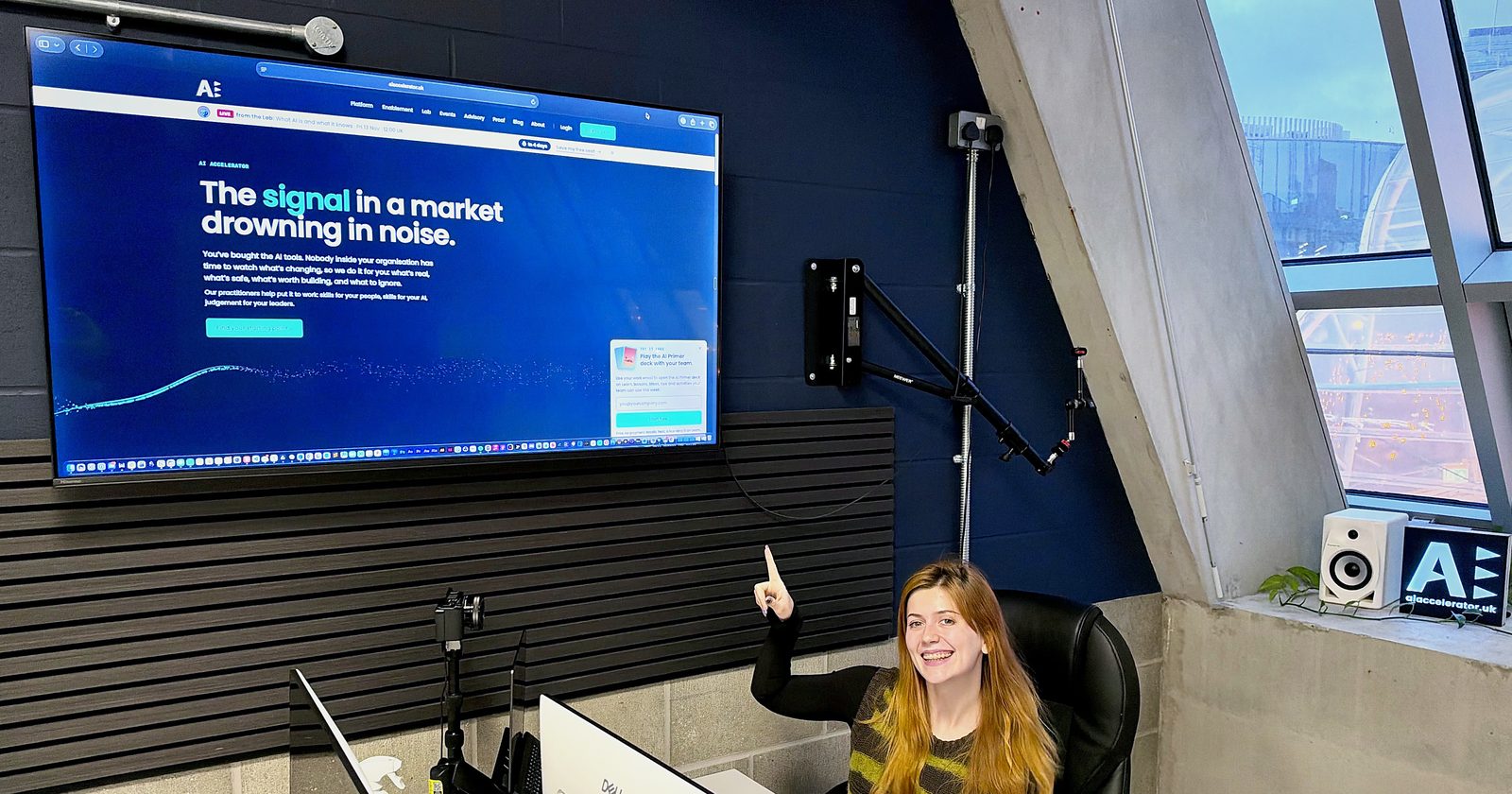
The new aiaccelerator.uk went live this morning. It looks different, but the bigger change is underneath. We've rebuilt it around the problem we've spent the last few years working on, and that problem has changed.
01The problem has changed
When we started, the job was getting people to give AI a go. Most people hadn't tried it, or had tried it once and decided it wasn't for them. So we ran workshops, showed people what it could do with their own work, and got them over that first hurdle.
That's still part of it. But the bigger problem now is signal.
AI changes every week. New models, new features, new tools, and a lot of noise about all of them. Most people can't tell which of it matters, and nobody inside the organisation has the time to find out. They've got day jobs.
Just the other day, AI got the ability to take control of the applications on your computer and use them. Not as a chatbot, and not only through connectors. It can now use pretty much any part of your computer to get things done. That widens the number of things you can use it for enormously. It comes with risks, obviously, but the opportunities are immense. And that was one week.
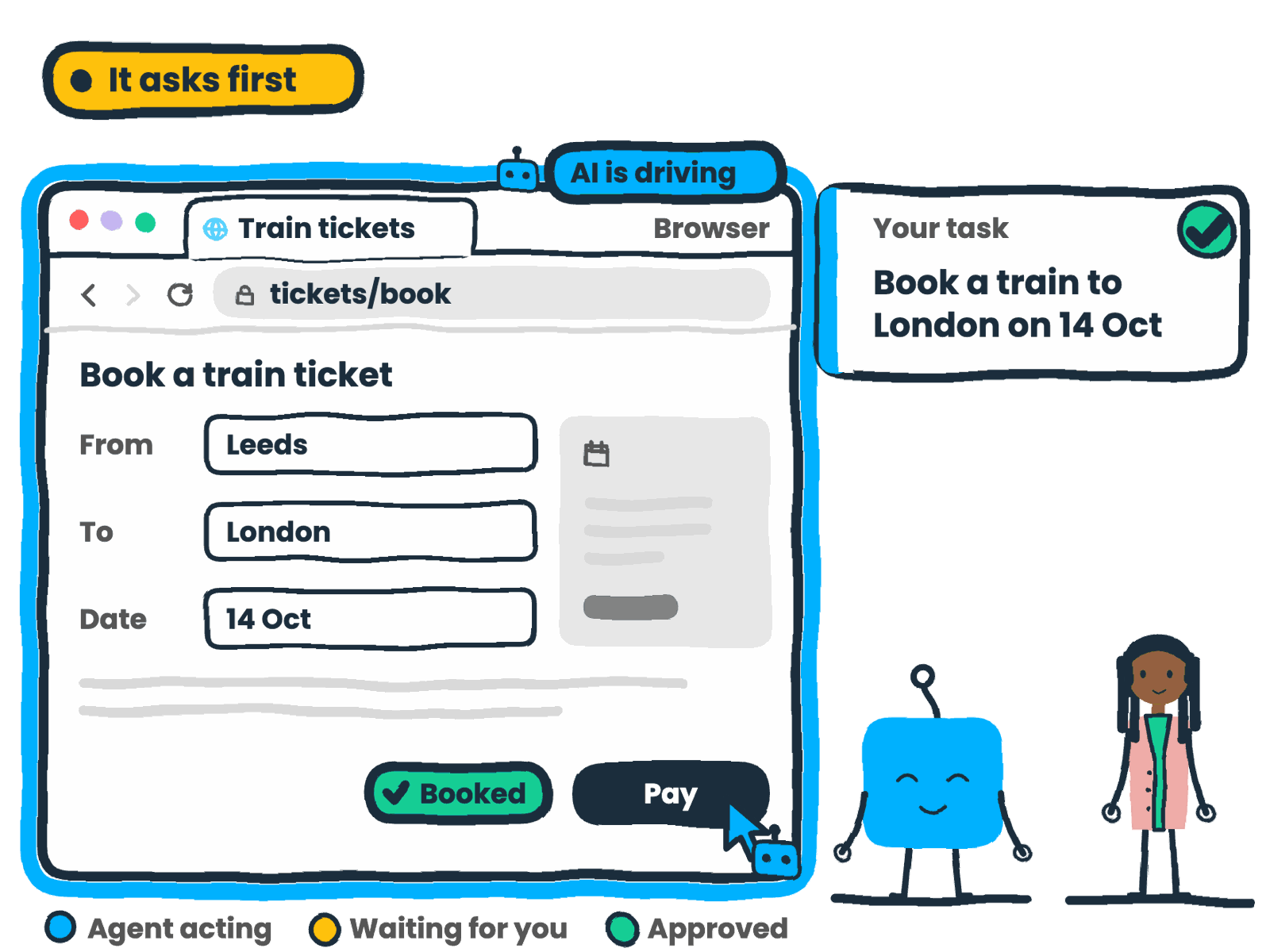
And it doesn't stand still. Whatever you learned six months ago is partly out of date. The tools you're using today are the worst they'll ever be. So a one-off training session, however good, starts going stale the week after.
02So we built the platform to keep up
Learn is our platform, and it's the same one our practitioners use every day. The key thing for me is that it keeps watch so your people don't have to.
Every week we look at what's changed and answer four practical questions. What's real. What's safe. What's worth building. And what to ignore.
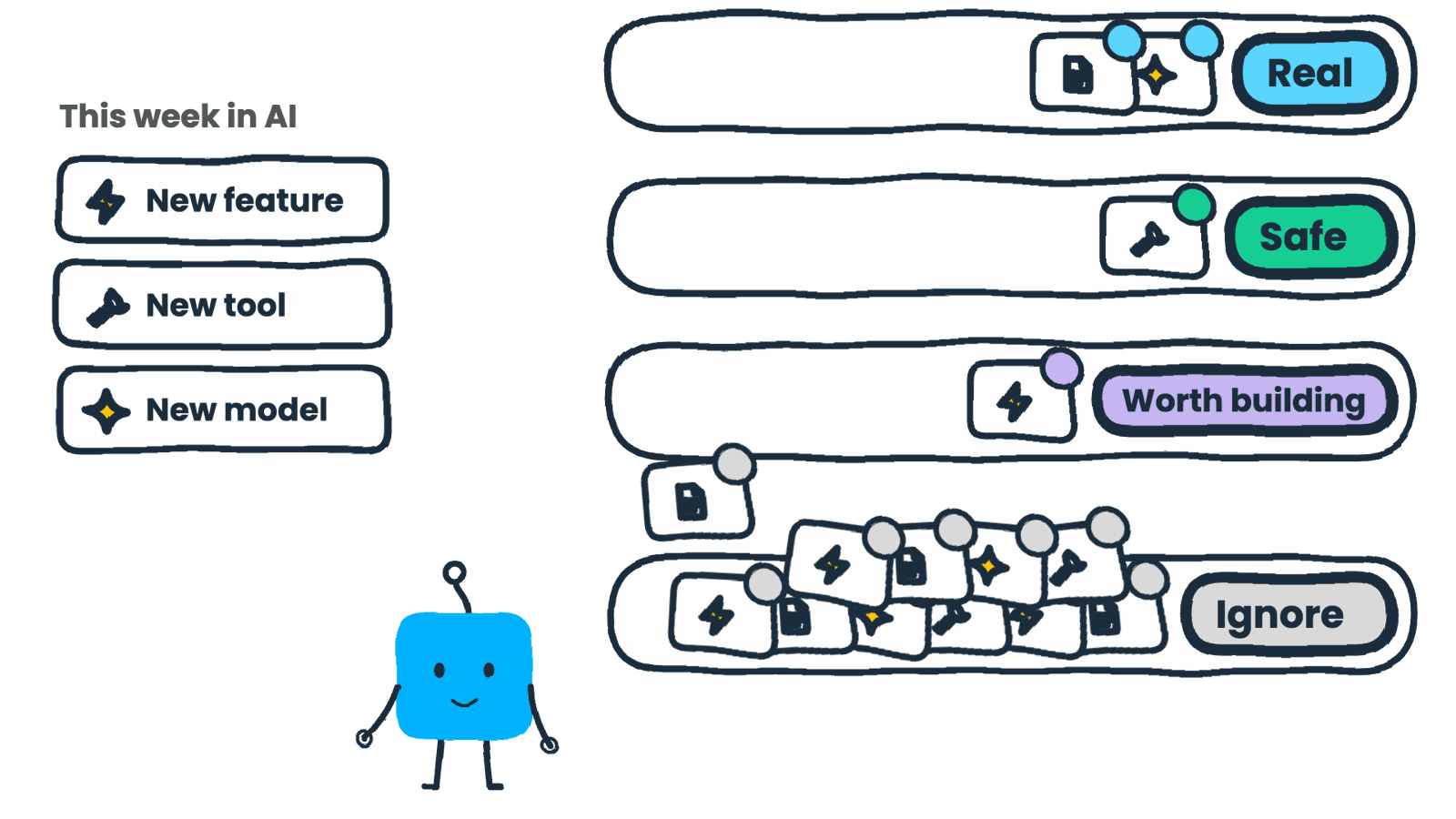
Then we put the answers where both halves of your workforce can use them. Lessons and techniques for your people. Skills and context files for your AI. Because the AI your team uses needs to keep up as well, not just the people using it.
It's built as a deck of short cards: lessons, ideas, tips and group activities. Your organisation deals the ones that matter to you, and people keep the ones they want in their own hand. The Platform page shows how it all works.
03The site is built for AI to read too
More and more people start with their AI assistant rather than a search engine. If someone asks it who can help their organisation adopt AI, we want it to be able to read what we actually do and get it right.
So the site is set up for that. It's written in plain language, every article opens with a short answer, and there's a guide for AI tools on what we do and where things are. It would be a bit odd to help organisations get ready for AI and not do it ourselves.
We built a lot of it with AI agents working alongside us, too. Which is exactly the kind of work we help our clients do.
04Have a play around
You can try the platform straight from the site. Pop your work email into the card on Inside the platform and you're into the AI Primer deck on Learn. It's free, and there are no payment details.
A few good places to start:
- What AI actually is. Eight minutes on what's really going on when you type into an AI tool.
- Plausible, not correct. Four minutes on why AI can sound right and still be wrong, and how to check.
- The capability map. Seven minutes on what it can actually do, beyond writing.
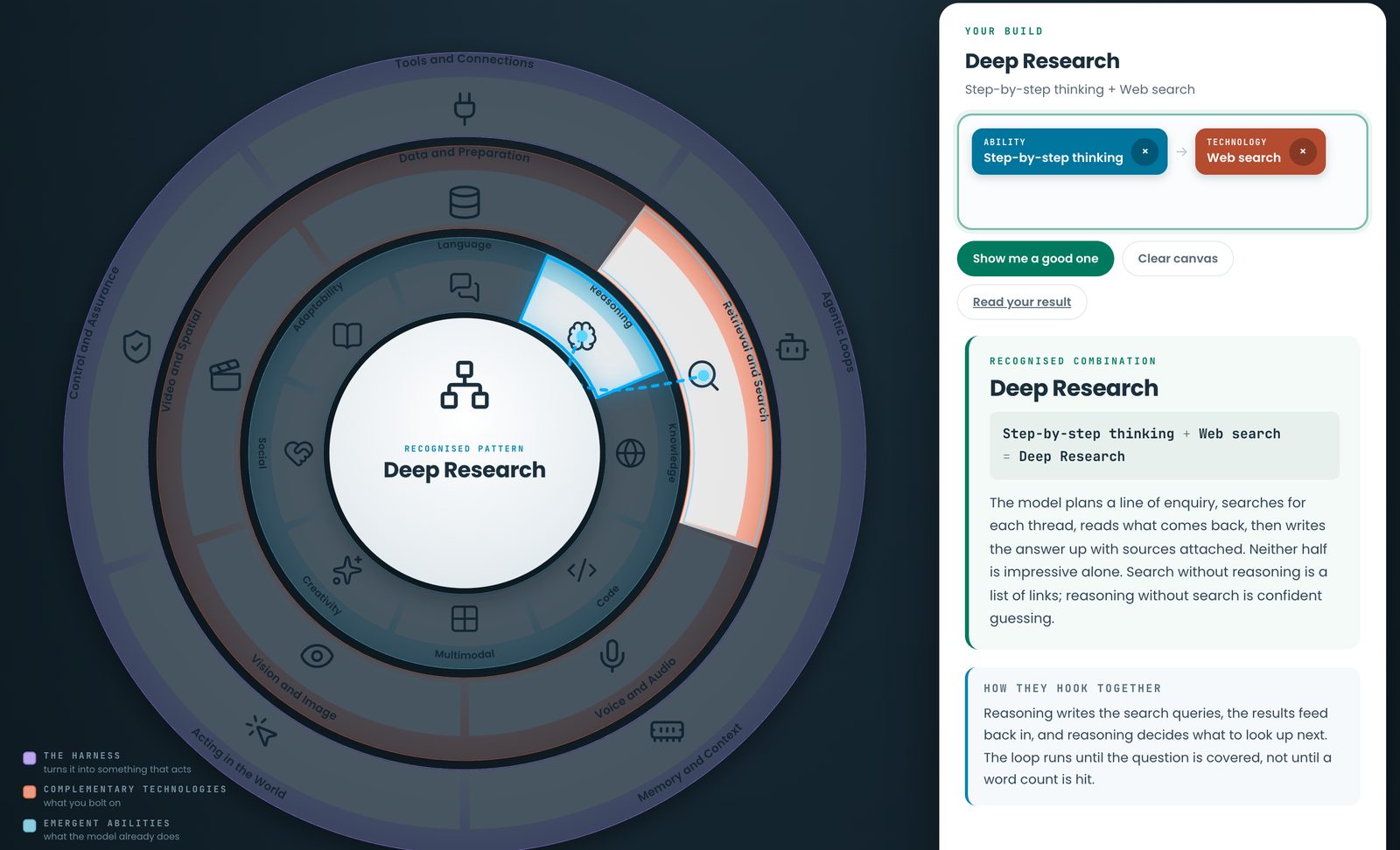
There's also the capability wheel on the same page. Pick a capability, add another, and see the useful work they can do together. Give it a go.
05How it all fits together
The other thing the old site never did well was show how the business fits together. This one does.
- Learn keeps your people and your AI current, every week.
- Enablement is our practitioners running sessions with your teams, on your work.
- The AI Adoption Lab in Greenwich is where you come and work on it with us, in the room.
- Advisory is for the leaders making the calls.
Skills for your people, skills for your AI, and judgement for your leaders. That's the whole thing, and we'll write more about why you need all three.
06Come and see it live
From this Friday we're teaching live from the Lab every week. Half an hour at lunchtime, free, online. One idea taught on the platform, what changed in AI this week, and your questions. The first one is on 13 November, on what AI is and what it knows. See the sessions and register.
A big thank you to Andreea Iaconi, Nova Wang, Jeremy Steer, Ross Pepperell and James Powell for helping bring this new vision to life. Really proud of what you've built.
Have a look around, and tell me what you think.