AI on site, not just in the pilot.
We help contractors get from scattered AI pilots to everyday use. Leaders agree where the line is, bid, commercial and site teams learn on their own kind of work, and a competent person still signs off everything that matters.
Already running an AI programme? See how we fit in ↓︎
Where this comes from
- Morgan Sindall ConstructionA six-month AI enablement programme in 2026
- Leaders to site teamsLeadership sessions, champions training and practitioner webinars
- The AI Adoption LabHands-on sessions at our Lab in the Greenwich Design District
- Cyber Essentials PlusCertified, and registered with the ICO
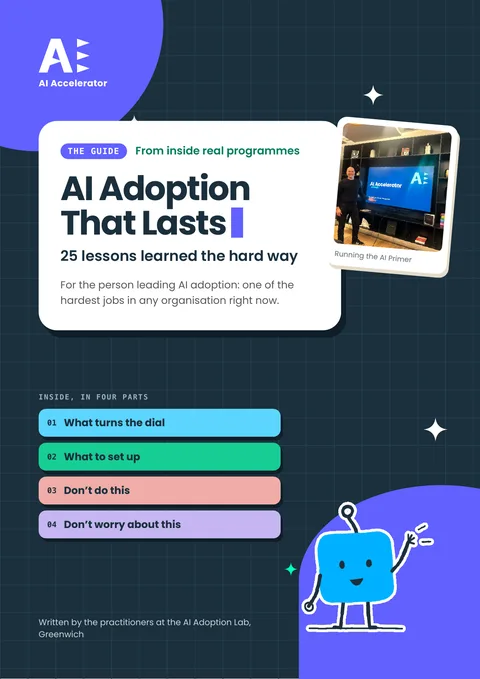 Free guideAI Adoption That Lasts: 25 lessons from running AI adoption programmes.Read it now →︎
What we see in construction.
Most contractors already have AI licences and a few keen early users. The blockers sit elsewhere.
A few enthusiasts in the office get value. Site teams and the commercial floor work the way they did last year.
Nobody has said what can go into which tool, so tender documents and client drawings stay out, or go in quietly.
The answers sit in specifications, drawings, minutes and site diaries across several systems. AI is only as good as what it can find.
Safety, design and contract decisions need a named competent person. Teams need to see where AI helps and where it stops.
“This was never really about the technology, it was about giving people permission and confidence to get on with it. At the start, some genuinely felt that using AI was somehow cheating and now the conversation has moved from ‘Can I do this?’ to ‘Look what I’m doing.’ That’s a huge shift and it becomes a virtuous cycle: someone solves a problem, somebody else sees it and thinks about what they could do. The real opportunity is having 1,600 problem-solvers who increasingly see AI as another tool they can reach for when they come up against a challenge.”
Your programme first. Then where we fit.
Your AI programme has its own goals and its own shape. So we start by understanding it: what it needs to achieve, how it's structured and where you want to accelerate. Then we add only what helps.
Leadership sessions
Your senior team uses AI on its own work and sees what other leaders are trying.
Practitioner-led training
Bid, commercial, design and site teams learn on their own kind of work.
Practitioner webinars
Regular live sessions open to the whole business: we show how, then everyone has a go.
Ongoing platform access
Short lessons, construction use cases and reusable skills between sessions.
40 ways contractors can put AI to work.
The same cards our platform uses. Scroll through them, or pick a team, and open one to see what AI does and what stays with your people.
Why now: skills
Agents used to be projects for IT. Skills put the same power in everyone's hands. A skill packages how your best people do a task, the steps, the checks and the house style, so anyone in the team can run it with AI and get the same quality. Many of these use cases start life as a skill.
The bid director decides whether to bid and what the business commits to.
Leaders choose which opportunities to pursue.
The bid team tailors every answer and signs off the submission.
The bid director sets the win strategy and owns the relationship.
The team decides which risks to price, own or pass on.
The bid board makes the call.
The bid team decides how to position against them.
The commercial manager decides whether to notify and what is claimed.
The commercial lead owns the explanation and the figures reported.
The buyer recommends the award; the commercial lead makes the appointment.
The quantity surveyor certifies the sum and issues the notice.
Commercial and legal decide what each change means and whether to accept it.
The commercial team and its advisers decide the position and the case.
Commercial leaders sign off every figure that is reported.
The planner decides what to change and owns the programme.
The commercial and design leads agree the impact and how it goes to the client.
The design manager checks the source before anyone acts on it.
The design manager decides what is asked and accepts each answer.
The design manager agrees every allocation with designers and subcontractors.
Designers and trade contractors resolve each clash.
The design team and client choose the scheme; designers keep design liability.
The supervisor checks it and signs the diary.
The site manager inspects the work and accepts each item as closed.
The chair confirms it heard right and agrees owners and dates.
The project manager agrees the cause and commits to the recovery.
The project manager accepts the file and hands it to the client.
The site team validates progress and agrees what is valued.
The contractor stays accountable for the information it hands over.
A competent person accepts or rejects the RAMS.
Safety leaders decide the response and who acts on it.
The supervisor delivers it and adapts it to the crew in front of them.
The quality manager accepts or rejects the plan.
A competent inspector checks the work and signs the record.
The authorised person issues or refuses the permit.
Duty holders approve every record and everything sent to the regulator.
Each person decides what goes in it.
Leaders decide which lessons change how the business works.
A named owner tests and maintains each one.
People apply the rule to the situation in front of them.
The team leader chooses where to start and sets the pace.

We rebuild buildings from their public documents.
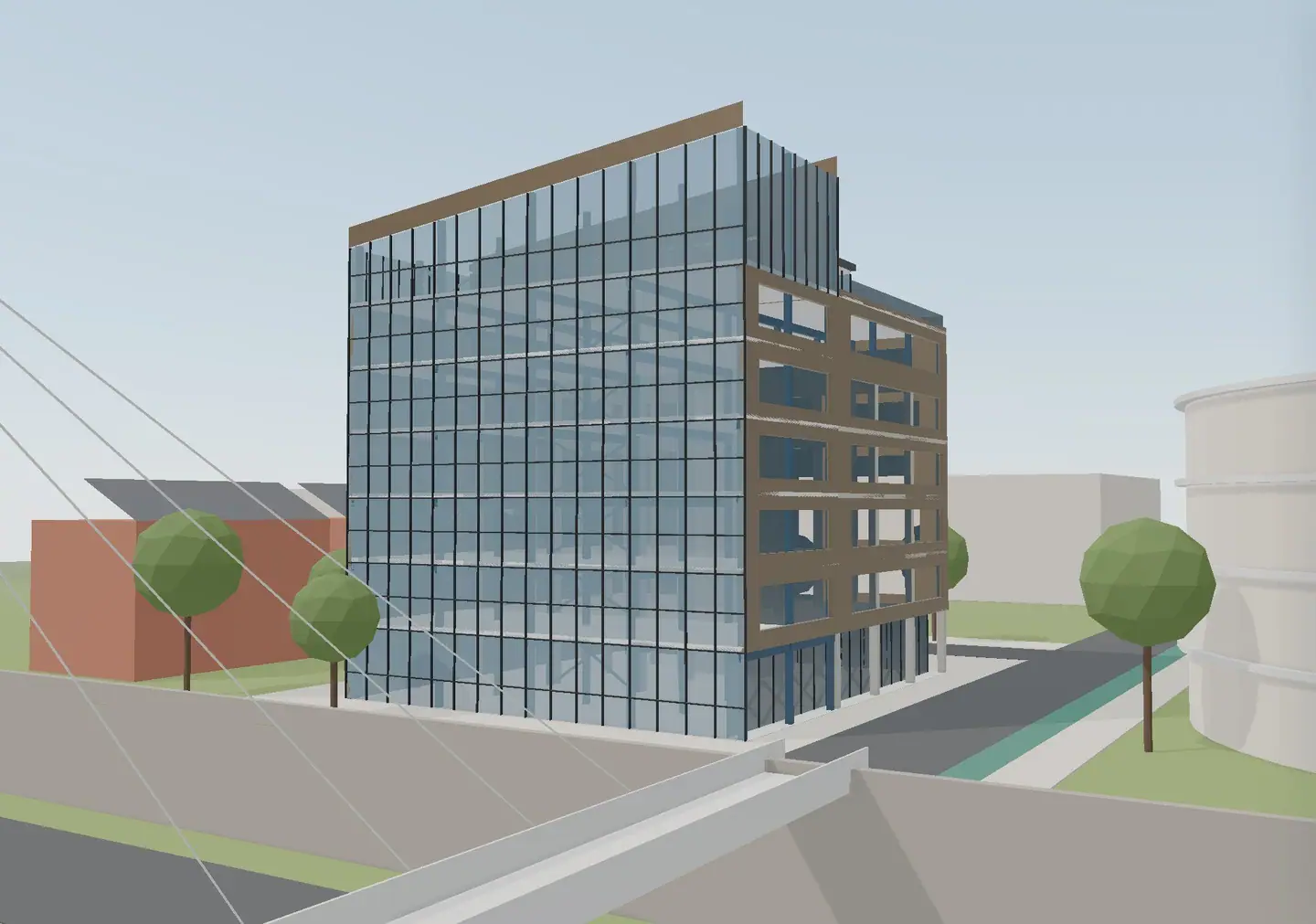
We gave an AI harness the public record for two live schemes: a university science building now going up and a large hospital scheme with planning consent. It read the planning papers, project news and site photos, worked out the massing, floor heights and structure, and built 3D models you can explore, with drawings to match.
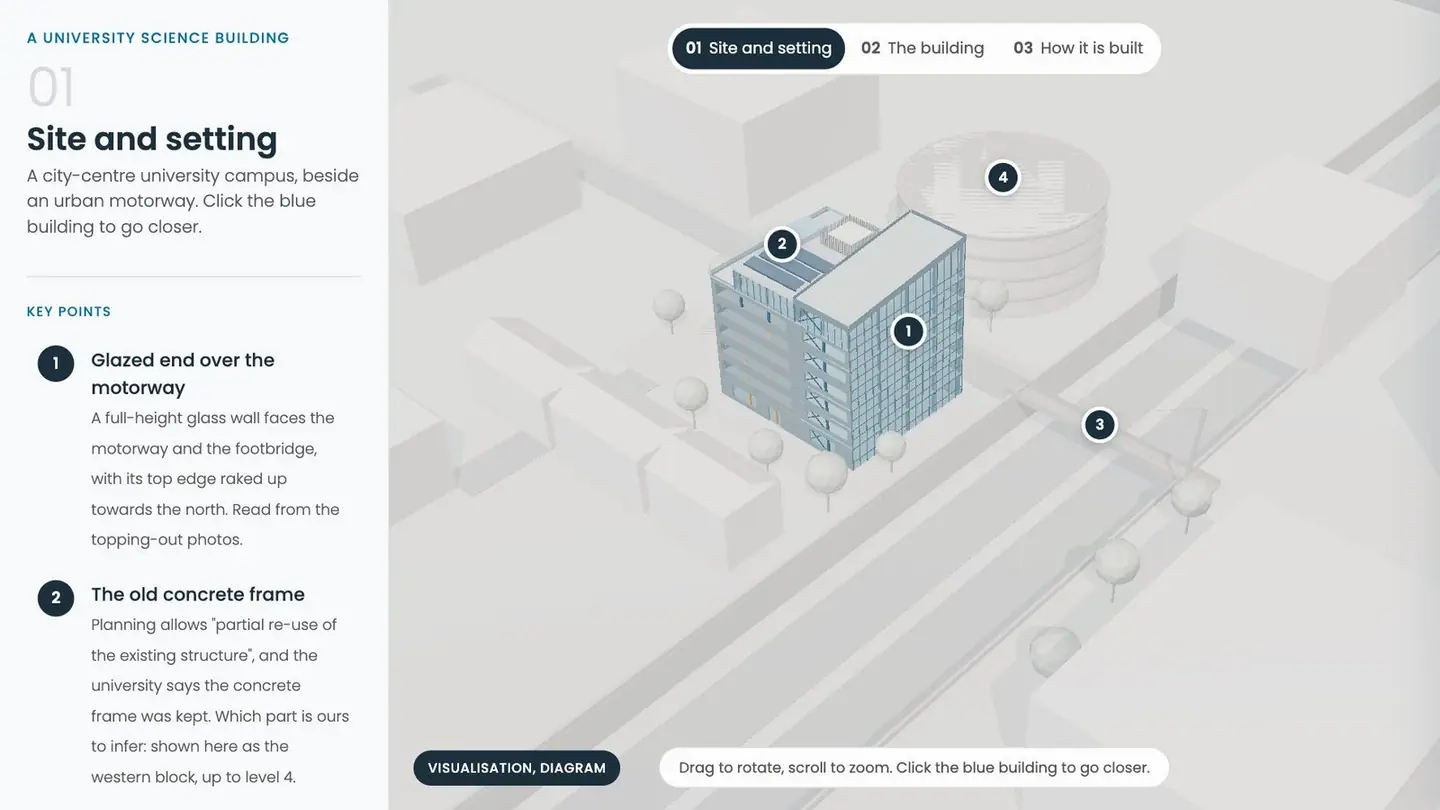
Loads about 1 MB · drag to look around
Built only from public documents, not from the design team's models. Facade detail, context and some dimensions are estimated, and each model says which figures are sourced and which are estimated.
It shows its working, so people can check it.
The hospital model in use · 0:34 · no sound
The same reading that built these models can work through your tender packs, specifications, drawings and site records.
The point isn't the model. It is to show your leaders and teams what is now possible, so they can see how AI could change their own work.
- Sourced, estimated or missing. Every figure says where it came from. Where no document says, the model says so rather than guessing.
- Made for your sessions. We build examples like this around the projects and problems your teams bring.
The questions your safety and legal teams ask first.
What can go into which tool?
We help you write simple rules by data type and tool, so staff know what they can paste in, from tender documents to client drawings.
Who signs it off?
Risk assessments, method statements, temporary works and design checks stay with a named competent person. AI drafts and checks; it doesn't sign.
Notices and correspondence
Early warnings, notices and claims carry contractual weight. AI can draft and track them; your commercial team decides what is sent.
Records you can stand behind
On higher-risk buildings the golden thread must be accurate and kept up to date. AI can keep records organised; people confirm what goes in.
We work this through with your safety, commercial and legal teams. It is not legal advice.
AI changes every month. Your people's knowledge should too.
A one-off course goes stale. Our platform keeps a steady supply of short lessons, use cases and activities coming to your teams, updated as the tools change. Signal, our newsletter, tells your leaders what changed and what it means for them.
- Minutes, not days. Each card is a short lesson, a use case or an activity people can do in their working week.
- Your own use cases. The use cases your teams choose sit beside ours, on the same cards.
- Signal. What changed in AI, and what it means for contractors, in plain English.
- Measurement built in. It is why we built the platform. You see who is using AI, which use cases stick and how confidence changes from people's first check-in to their last, so you can show the board what changed.
Working with us, step by step.
Start wherever suits you. Each step is useful on its own, and you decide whether to take the next one.
Step 1 · 30 minutes · Free
Compare notes with us
We share what is working across construction and ask about your teams. You leave with three use cases worth trying first.
You do: pick a time. We do: send two short questions beforehand.
Book a time →︎Step 2 · Half a day
Brief your leadership team
Your senior team uses AI on its own work, agrees where the line is and picks the first use cases. Online, at your office or at our Lab in Greenwich.
You get: a short written plan your board can read.
About leadership sessions →︎Step 3 · From £1,500 a session
Train your teams
Practitioner-led sessions for bid, commercial, design and site teams, built around their own kind of work.
Price per online session, excluding VAT.
How sessions work →︎Step 4 · Ongoing
Keep everyone ahead
Our platform and Signal keep the learning going after the sessions end, so the habit sticks and nobody falls behind.
You get: new cards as AI changes, and measures you can take to the board: who is using AI, what stuck, what changed.
See the platform →︎
Want to see us first? Come to a free Live from the Lab session →︎ Or download the AI adoption guide, free.
AI Adoption That Lasts: 25 lessons learned the hard way.
What we have learned running AI adoption programmes inside real organisations: what turns the dial, what to set up, what to skip. Written for the person leading AI adoption.
Questions contractors ask us.
How should a contractor start with AI?
With the senior team, not the tools. Agree what AI should change, where the line is and who owns the programme. Then get people using it on their own work within weeks, so use cases come from site and the commercial floor.
Which use cases do contractors start with?
The ones closest to documents: reading tender packs, answering questions from specifications, turning meetings into actions, drafting risk assessments for review and writing cost commentary. They save time quickly, and a qualified person can check every output.
Can AI be trusted with safety documents?
It can draft, cross-check and spot gaps, but it doesn't sign. A competent person reviews and approves every risk assessment and method statement, as your procedures already require.
What about client confidentiality and tender documents?
Use an enterprise tool under a data processing agreement, check what each client contract allows, and give staff clear rules on what they can paste in and why.
How do you train site and commercial teams?
Live and hands-on, on their own kind of work, in short sessions inside the working week. The platform keeps the habit going afterwards.
Let's compare notes.
Thirty minutes on what is working in AI adoption across construction, and where your teams could start.