Read the transcript
So ask your leadership team one question: who here is responsible for keeping track of what changes in AI every week?
In most organisations, the answer is pretty much nobody, or it's a bit of everybody, which in practice is kind of nobody. And that's not anyone's fault. It's just a gap in the structure. But in our work, it's the main reason that organisations fall behind in AI, more than budget, more than talent.
Something changes pretty much every week. Most of it won't matter to you, but some of it will matter, and it will matter a lot. So somebody has to filter that.
The key thing for me is it's not reading everything. Nobody can. But there are four things you can do. You can scan a short list of sources on a fixed day. You can test anything promising in your own real work. You can judge what it means for you: quite often, the right answer is just to wait and see what happens. And you can pass it on. This is really important. If you learn something, tell other people. Give it to people who can actually make a decision about it.
So name one person, give them a few hours a week, and a route to the leadership team.
If you want to see how we're doing the watching, come to Live from the Lab. It's free, it's just half an hour on a Friday, around 12 o'clock. Bring whoever you think would be interested in learning about what happens at the frontier, and we'll share with you the techniques and the things that we're in. So see you there. The full post is below.
Ask your leadership team a simple question. Who here is responsible for keeping track of what changes in AI each week?
In most organisations the answer is nobody. Or, more often, it's a bit of everyone. The IT lead reads some release notes. Someone in marketing tries every new tool. A board member forwards an article on a Sunday night. It sits with everyone, so it sits with no one.
That isn't anyone failing. It's a gap in the structure. And in our work, it's the main reason organisations fall behind on AI. More than budget, talent or which tool they picked.
01Why it matters more each month
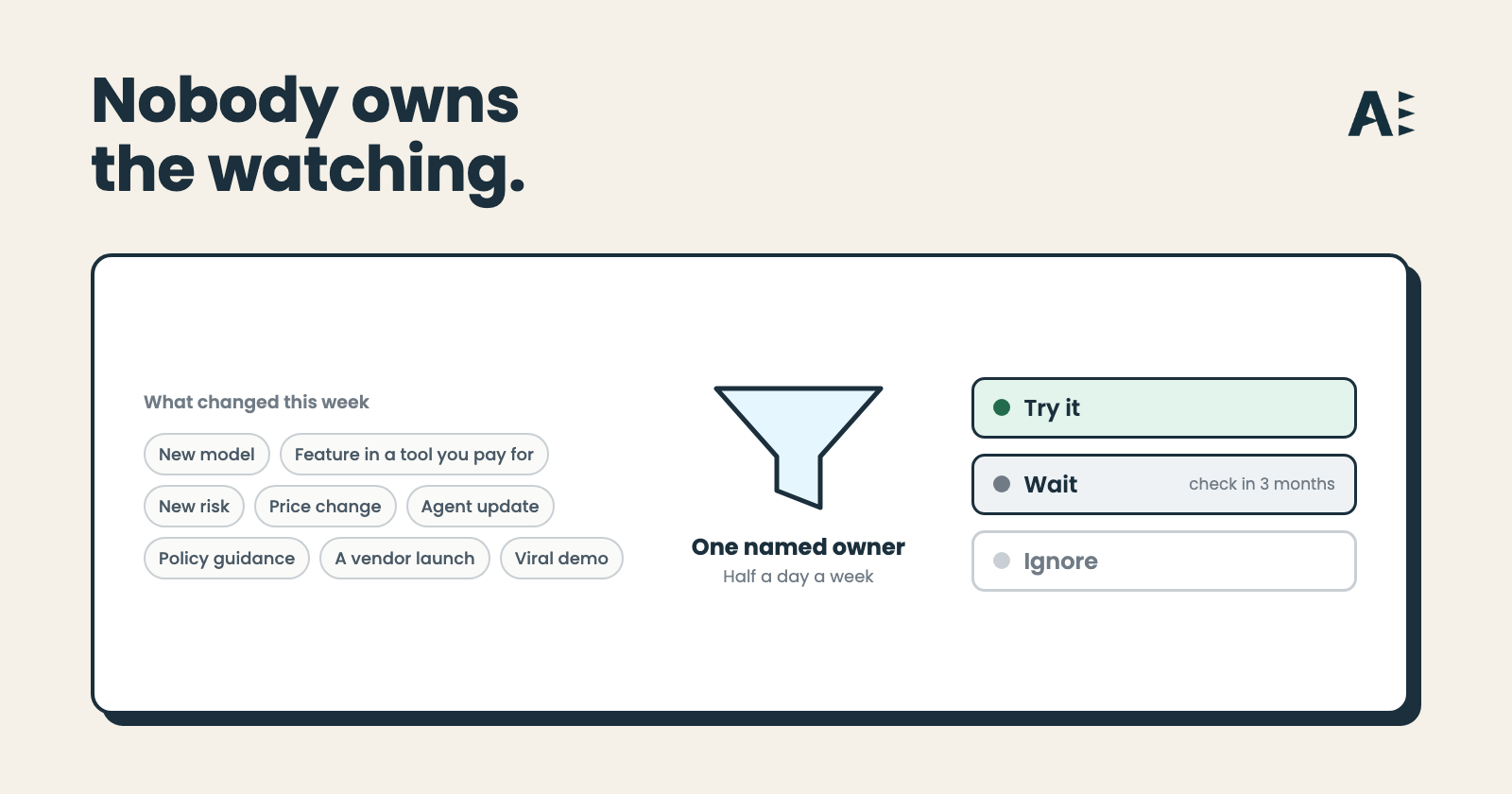
Something changes most weeks. A new model. A feature switched on inside a tool you already pay for. A new risk your security team should know about. Most of it won't matter to you. Some of it will matter a lot.
Without someone watching, you get one of two outcomes. Either you fall behind quietly, which doesn't show up quarter to quarter and then suddenly does. Or people rush in on their own, with their own accounts and their own tools, and you lose sight of what's being used and where your data is going.
The watching is what tells you which of those you're heading for, early enough to do something about it.
02What the job actually is
The key thing for me is that it isn't reading everything. Nobody can. It's a filter. The job has four parts:
- Scan. A short list of trusted sources, checked on a fixed day, not whenever there's a spare hour.
- Test. Try anything promising on your own real work before anyone recommends it.
- Judge. Decide what it means for you: your data, your risk appetite, the tools you already have. Is it real, is it safe for us, is it worth doing? Quite often the right answer is to wait three months.
- Pass it on. A short note to the people who need it, and a clear decision taken to whoever can sign it off.
The judging is the bit you can't outsource to a newsletter. A feed tells you what happened. It can't tell you whether it matters for your organisation.
03Who should own it
One named person, with time set aside for it. Not a committee, and not "everyone keep an eye out".
They need to be close enough to the work to test things properly, and senior enough to be listened to when they say "not yet". That's often an AI or adoption lead, a head of digital, or a capable operations person. Whoever it is, it needs to be in their job description and their diary, or it'll be the first thing to go in a busy week.
Be clear about what they're not, too. They don't build everything, and they're not the AI police. They filter what's happening out there into what your organisation actually does.
04How to start this week
- Name the owner. One person, written down.
- Give them a fixed slot. Half a day a week is a sensible start.
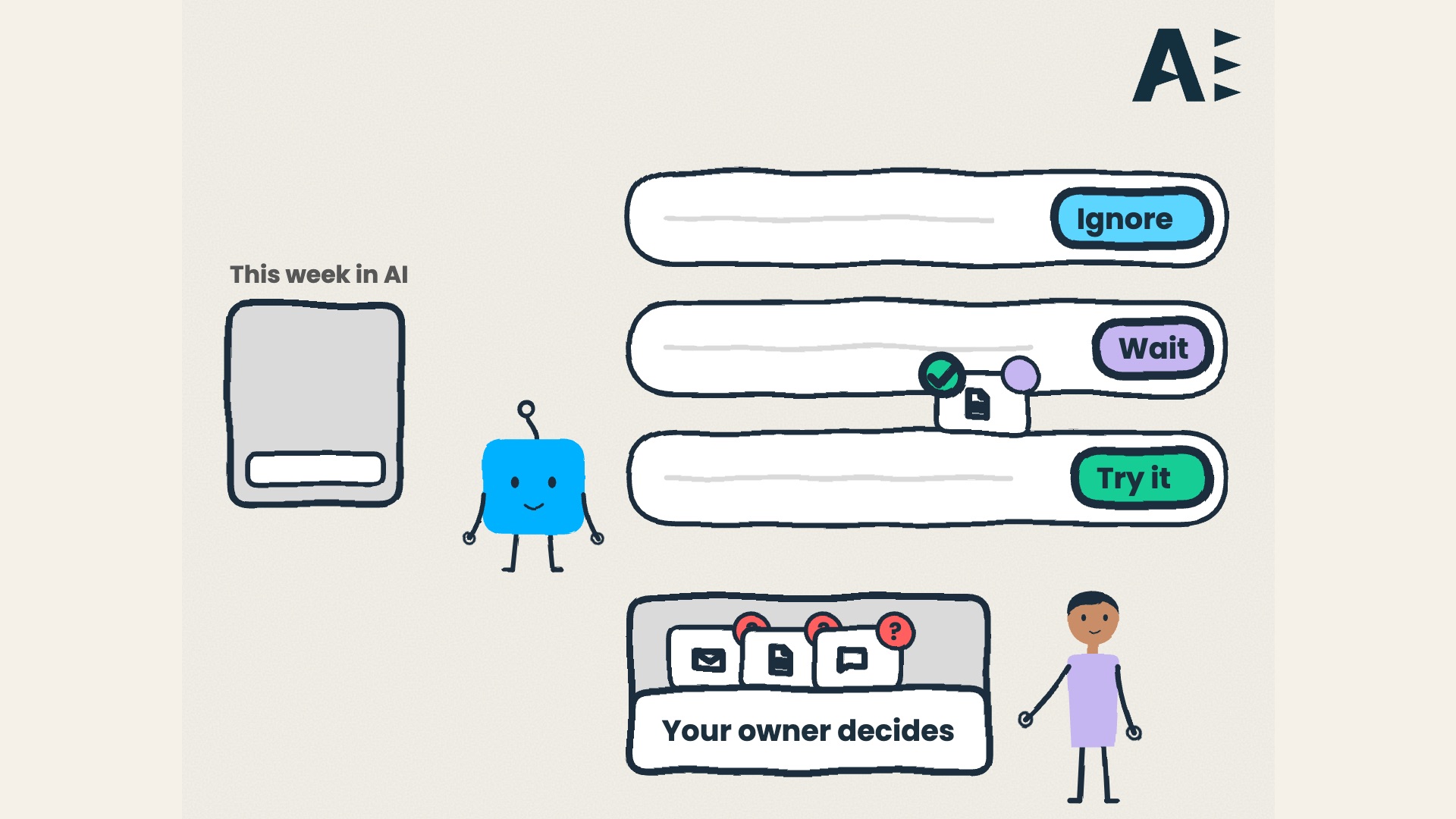
- Agree a one-page note. What changed, what it means for us, and what we're doing about it: try it, wait, or ignore it.
- Give them a route to a decision. A standing item with the leadership team, at least monthly.
- Check after a month. Did anything they flagged change a decision? If not, change the sources, not the person.
None of this costs much beyond attention, and attention is exactly what's missing when the job belongs to nobody.
05Where we fit
Watching the frontier is the work we do every week, for ourselves first and then for our clients. We test things on our own business before we recommend them, and we judge what matters for each organisation we work with. Your owner still matters, because someone inside has to apply that to your context. We give them a head start, and someone to check their thinking with.
If you want a feel for how we do it, come to Live from the Lab, our free half hour on AI every Friday at 12. Tomorrow's session is on what AI is and what it knows. Bring whoever you'd name as your owner.